

U.P. Revenue Code 2006 stipulates provisions with respect to all revenue matters, including Demarcation, Mutation, Suits for various reliefs, conversion, powers of collector and deputy collector, and Board of Revenue.
In this article, we will explore the powers of Deputy Collector or Sub-Divisional Officer vis-à-vis declaration of a tenure holder with respect to his land.
Provisions under U.P. Revenue Code
At the outset, it must be stated that under the U.P. Revenue Code, Section 144 provides as follows:
“144. Declaratory suits by tenure holders.- (1) Any person claiming to be a bhumidhar or asami of any holding or part thereof, whether exclusively or jointly with any other person, may sue for a declaration of his rights in such holding or part.
(2) In every suit under sub-section (1) instituted by or on behalf of :-
(a) a bhumidhar, the State and the [Gram Panchayat] shall be necessary parties;
(b) an asami, the land-holder shall be a necessary party.”
A plain and simple reading of Section 144 would reflect that a person claiming to be a Bhumidhari or Asami of any holding or part thereof, may sue for a declaration of his rights in such holding or part thereof and State of U.P. and Gram Panchayat shall be necessary parties to such proceedings, if instituted.
Section 74 of the U.P. Revenue Code provides as follows:
74. Classes of tenures.- There shall be following classes of tenure holders, namely-
(a) Bhumidhar with transferable rights;
(b) Bhumidhar with non-transferable rights;
(c) Asami; and
(d) Government lessee.
Allahabad High Court on Declaration of rights by Bhumidhar
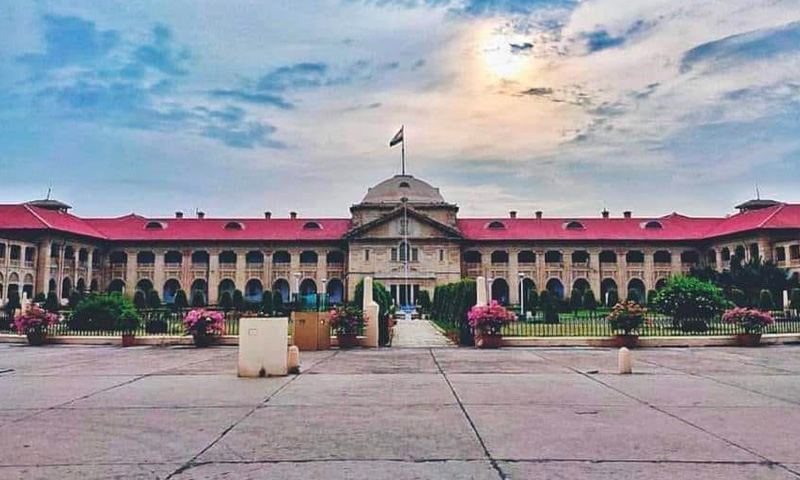
In a recent judgment of Jayraj Singh vs. State of U.P. and 3 others, the Hon’ble Allahabad High Court has held that no officer, in his administrative capacity, holds any power to grant a declaration in favour of any tenure holder.
The relevant portion of the judgment is as follows:
“A careful reading of the aforesaid provisions would reveal that all the three provisions; Sections 131A, 131B of Act, 1950 and 76 of Code, 2006 speak of conferment of status upon the concerned tenure holder as Bhumidhar with transferable rights, however, the provisions do not provide for a forum for making conferment or such declaration. Certainly, the Sub-Divisional Officer or any other officer has not been held to be empowered, on administrative side, to grant such a declaration in favour of concerned tenure holder under the aforesaid provisions.”
The Hon’ble Allahabad High Court further held that even if petitioner might have acquired status as that of Bhumidhar with transferable rights, such an aspect needs adjudication by the Sub-Divisional Officer in appropriate suit proceedings under Section 144 of the Code, 2006, where the State as well as Gram Panchayat shall be necessary parties and would have their say in the proceedings.
Hence, it is categorically settled that merely on an application on the administrative side, declaration cannot be sought and the Sub Divisional Officer has no jurisdiction to grant such a declaration on administrative side.
Writ Petition before Allahabad High Court
No mandamus can be sought commanding the sub-divisional officer to decide any application of the sort seeking declaration of tenure holder with respect to a certain land. This has been held in Jayraj Singh Case by the Allahabad High Court. The Hon’ble Court held as follows:
13. As far as writ of mandamus is concerned, In Oriental Bank of Commerce Vs. Sunder Lal Jain and another (2008) 2 SCC 280, the Apex Court, after referring to its earlier judgments in Bihar Eastern Gangetic Fisherman Cooperative Society Ltd. Vs. Sipahi Singh (1977) 4 SCC 145; Lekhraj Sathramdas Lalvani Vs. N.M. Shah, AIR 1966 SC 334 and Dr. Uma Kant Saran Vs. State of Bihar 1993(1) SCC 485, observed that a writ of mandamus can be granted only in a case where there is a statutory duty imposed upon the officer concerned and there is a failure on the part of that officer to discharge the statutory obligation.”
14. The above exposition of law makes it clear that writ of mandamus cannot be issued on mere asking unless the pre-conditions are satisfied. Such well-defined conditions are not satisfied in the present case.
15. Since it has been found that the Sub Divisional Officer has no statutory competence to grant a declaration of Bhumidhari rights on administrative side, no writ of mandamus, as prayed for, can be issued. However, the petitioner is always at liberty to institute statutory proceedings under Section 144 of the U.P. Revenue Code, 2006.
It is further clarified that any order or proceeding by the Sub-Divisional Officer in the administrative side in the nature of declaration will be ab initio illegal, and liable to be quashed by the Hon’ble Allahabad High Court on filing a writ petition praying for a writ of certiorari for quashing the said illegal order.