

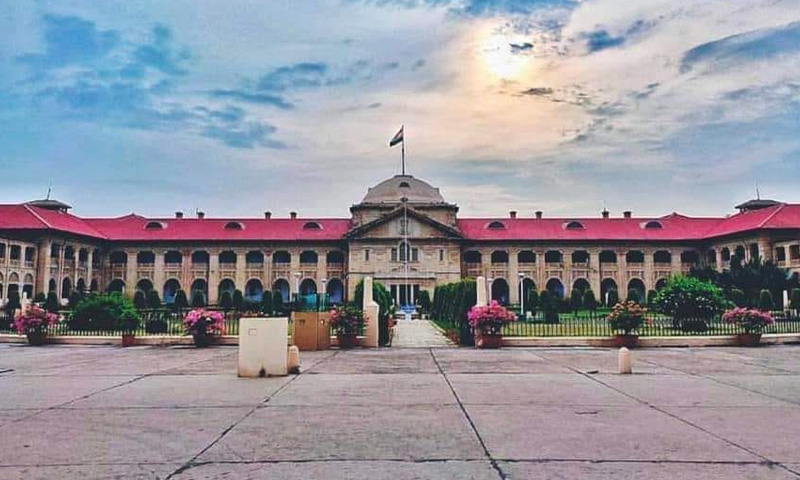
Courtesy: Shreyanshi Srivastava
The Railway Claims Tribunal Act, 1987, was enacted to provide for the establishment of a Railway Claims Tribunal for inquiring into and determining claims against a railway administration for loss, destruction, damage, deterioration or non-delivery of animals or goods entrusted to it to be carried by railway, or for the refund of fares or freight or for compensation for death or injury to passengers occurring as a result of railway accidents or untoward incidents.
The claims tribunal is vested with jurisdiction by virtue of Section 13 of the Railway Claims Tribunal Act, 1987, which is as follows:
13. Jurisdiction, powers and authority of Claims Tribunal.—(1) The Claims Tribunal shall exercise, on and from the appointed day, all such jurisdiction, powers and authority as were exercisable immediately before that day by any civil court or a Claims Commissioner appointed under the provisions of the Railways Act,—
(a) relating to the responsibility of the railway administrations as carriers under Chapter VII of the Railways Act in respect of claims for—
(i) compensation for loss, destruction, damage, deterioration or non-delivery of animals or goods entrusted to a railway administration for carriage by railway;
(ii) compensation payable under section 82A of the Railways Act or the rules made thereunder; and
(b) in respect of the claims for refund of fares or part thereof or for refund of any freight paid in respect of animals or goods entrusted to a railway administration to be carried by railway.
(1A) The Claims Tribunal shall also exercise, on and from the date of commencement of the provisions of section 124A of the Railways Act, 1989 (24 of 1989), all such jurisdiction, powers and authority as were exercisable immediately before that date by any civil court in respect of claims for compensation now payable by the railway administration under section 124A of the said Act or the rules made thereunder.;
(1B) The Claims Tribunal shall also exercise, on and from the commencement of Part XIV of Chapter VI of the Finance Act, 2017, the jurisdiction, powers and authority conferred on the Tribunal under Chapter VII of the Railways Act, 1989.
(2) The provisions of the Railways Act, 1989 (24 of 1989) and the rules made thereunder shall, so far as may be, be applicable to the inquiring into or determining, any claims by the Claims Tribunal under this Act.
What is the legal provision for the basis of compensation of Claim before the Claims Tribunal?
Section 124A of the Railways Act, 1999 provides the statutory backing for claims. The provision is as follows:
“124A. Compensation on account of untoward incidents.—When in the course of working a railway an untoward incident occurs, then whether or not there has been any wrongful act, neglect or default on the part of the railway administration such as would entitle a passenger who has been injured or the dependant of a passenger who has been killed to maintain an action and recover damages in respect thereof, the railway administration shall, notwithstanding anything contained in any other law, be liable to pay compensation to such extent as may be prescribed and to that extent only for loss occasioned by the death of, or injury to, a passenger as a result of such untoward incident: Provided that no compensation shall be payable under this section by the railway administration if the passenger dies or suffers injury due to—
(a) suicide or attempted suicide by him;
(b) self-inflicted injury;
(c) his own criminal act;
(d) any act committed by him in a state of intoxication or insanity;
(e) any natural cause or disease or medical or surgical treatment unless such treatment becomes necessary due to injury caused by the said untoward incident.
Explanation.—For the purpose of this section, “passenger” includes—
(i) a railway servant on duty; and
(ii) a person who has purchased a valid ticket for travelling, by a train carrying passengers, on any date or a valid platform ticket and becomes a victim of an untoward incident.”
The provisions regarding claims are beneficial and intended to ensure proper compensation for victims and their dependents without forcing them to undergo lengthy civil litigation. The beneficial nature of the scheme in toto is underscored by the provision regarding extent of liability of the Railway Administration under Section 124 of the Railways Act, 1989, which is as follows:
S.124. Extent of liabililty – When in the course of working a railway, an accident occurs, being either a collision between trains of which one is a train carrying passengers or the derailment of or other accident to a train or any part of a train carrying passengers, then whether or not there has been any wrongful act, neglect or default on the part of the railway administration such as would entitle a passenger who has been injured or has suffered a loss to maintain an action and recover damages in respect thereof, the railway administration shall, notwithstanding anything contained in any other law, be liable to pay compensation to such extent as may be prescribed and to that extent only for loss occasioned by the death of a passenger dying as a result of such accident, and for personal injury and loss, destruction, damage or deterioration of goods owned by the passenger and accompanying him in his compartment or on the train, sustained as a result of such accident.
Explanation.—For the purposes of this section “passenger” includes a railway servant on duty.
In essence, the foundational facts that need to be established are:
- Travelling on the basis of a valid ticket
- An accident leading to death
Furthermore, in assessing the claims, technical approaches and lapses in procedure should not defeat the welfare aim of the statute, as it does not befit the Railways, as an instrumentality of the State, to take such restrictive, pigeonhole view. The governing standard is the preponderance of probabilities and not beyond reasonable doubt, as in criminal trials.
What is an “untoward incident” under the Railways Act?
Section 123(c) of the Railways Act defines an “untoward incident” to include several situations, one of the most important being:-
Accidental falling of any passenger from a train carrying passengers.
Once an untoward incident is established, compensation under Section 124A generally follows unless the Railways successfully prove one of the statutory exceptions.
The compensation under Section 124A is based upon the principle of strict or no-fault liability, meaning negligence need not be established by the claimant.
Who can apply for a claim?
Section 125 of the Railways Act, 1989 answers the aforesaid question. The following classes of persons can file an application under Section 124A of the Railways Act, 1989:
(a) A person who has sustained the injury or suffered any loss,
(b) Any agent duly authorised by such person in this behalf,
(c) where such person is a minor, by his guardian,
(d) where death has resulted from the accident or the untoward incident, by any dependant of the deceased or where such a dependant is a minor, by his guardian.
Is recovery of a railway ticket necessary to prove that the deceased was a bona fide passenger?
One of the most common reasons for rejection of claims by the Railway Claims Tribunal is the absence of a journey ticket. However, the Supreme Court has clarified that non-recovery of a railway ticket alone cannot defeat a genuine claim.
In Union of India v. Rina Devi, (2019) 3 SCC 572, the Supreme Court held that the claimant is only required to establish foundational facts. Once such facts are proved, the burden shifts upon the Railways to establish that the deceased was not a bona fide passenger. It further held that mere absence of a Railway Ticket, it cannot be presumed to mean that the deceased was not a bona fide passenger.
The Court observed that in cases involving accidental deaths, the ticket may be lost during the incident or while shifting the victim, and therefore its absence cannot automatically discredit the claim.
The decision in Rina Devi (supra) was subsequently approved by a Bench of three judges in Doli Rani Saha v. Union of India, which records that merely because the ticket of a train journey was not found on the person of the deceased, it will not change his status as a bona fide passenger. It has been held that the initial burden of the claimant can be satisfied by way of an affidavit.
What is the law regarding challenging an award in an appeal before the Hon’ble Allahabad High Court?
Section 23 of the Railway Claims Tribunal Act, 1987 provides for the remedy of Appeal against the order of the Tribunal. Every order of the Tribunal is appealable before the Hon’ble Allahabad High Court, except consent orders, and as such, one may prefer a First Appeal from Order before the Hon’ble Allahabad High Court, colloquially referred as F.A.F.O. The appeal must ordinarily be filed within 90 days from the order of the Tribunal. The High Court may condone the delay where sufficient cause is shown.
Unlike the Tribunal, which determines facts and evidence at the first instance, the High Court primarily sits in Appeal, and as such, there is a presumption attached to the judgment. The Hon’ble Allahabad High Court may interfere in its appellate jurisdiction where material evidence has been ignored, findings are perverse, or where legal provisions or principles have been wrongly interpreted or overlooked.
Does falling from a moving train amount to an untoward incident?
Yes. This issue was conclusively settled by the Supreme Court in Jameela v. Union of India, (2010) 12 SCC 443. The Court held that accidental falling from a running train squarely falls within the definition of an “untoward incident” under Section 123(c) of the Act. The Hon’ble Apex Court held as under:
“7. It is not denied by the Railway that M. Hafeez fell down from the train and died while travelling on it on a valid ticket. He was, therefore, clearly a “passenger” for the purpose of section 124A as clarified by the Explanation. It is now to be seen, that under section 124A the liability to pay compensation is regardless of any wrongful act, neglect or default on the part of the railway administration. But the proviso to the section says that the railway administration would have no liability to pay any compensation in case death of the passenger or injury to him was caused due to any of the reasons enumerated in clauses (a) to (e).
8. Coming back to the case in hand, it is not the case of the Railway that the death of M. Hafeez was a case of suicide or a result of self-inflicted injury. It is also not the case that he died due to his own criminal act or he was in a state of intoxication or he was insane, or he died due to any natural cause or disease. His falling down from the train was, thus, clearly accidental.”
Hence, merely standing near the door of a moving train or losing balance does not amount to a criminal act or self-inflicted injury to disentitle the claimant from compensation.
What are the statutory exceptions available to Railways?
The Railways must then prove one of the statutory exceptions contained in the proviso to Section 124A, namely:
(a) suicide or attempted suicide by him;
(b) self-inflicted injury;
(c) his own criminal act;
(d) any act committed by him in a state of intoxication or insanity;
(e) any natural cause or disease or medical or surgical treatment unless such treatment becomes necessary due to injury caused by the said untoward incident.
The High Court has consistently reiterated that beneficial legislation must receive a liberal interpretation so that deserving claimants are not deprived of the compensation.
How is the compensation determined?
The compensation is determined in accordance with Section 127 of the Railways Act, 1999, which is as follows:
127. Determination of compensation in respect of any injury or loss of goods.—(1) Subject to such rules as may be made, the rates of compensation payable in respect of any injury shall be determined by the Claims Tribunal.
(2) The compensation payable in respect of any loss of goods shall be such as the Claims Tribunal may, having regard to the circumstances of the case, determine to be reasonable.
Accordingly, the Railway Accidents and Untoward Incidents (Compensation) Rules, 1990 were made, of which the Schedule provided the compensation to be paid. Furthermore, the 1990 Rules have been amended by the Railway Accidents and Untoward Incidents (Compensation) Amendment Rules, 1997, and then subsequently by the Railway Accidents and Untoward Incidents (Compensation) Amendment Rules, 2016. The 2016 Amendment enhances the compensation in case of death to Rs. 8,00,000/-. Enhancements have also been made under the headings of other injuries.